

Aortic Valve Surgery
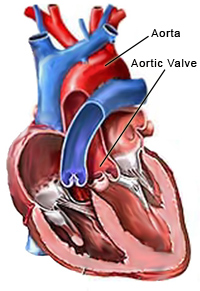
The Aortic Valve
The aortic valve is one of four valves in the human heart, and plays an important role ensuring that blood pumped from the powerful left ventricle flows forward to the rest of the body. Problems with the aortic valve can be divided into two broad categories, known as aortic regurgitation and aortic stenosis. If the aortic valve becomes severely diseased, aortic valve replacement surgery may be required. Certain patients may also be a candidate for a new, less invasive procedure known as Trans-Aortic Valve Replacement (TAVR).
A normal aortic valve opens during contraction of the heart and closes during the relaxation period. This ensures that blood flows forward to the rest of the body and not back into the heart. If the valve leaks when it should be closed, aortic regurgitation is present. This causes the heart to work harder to pump extra blood to overcome the volume load it faces. If the valve becomes narrowed and obstructed (usually due to calcification), aortic stenosis is present. Both aortic stenosis and aortic regurgitation decrease the amount of blood that can be pumped from the heart to the body and lead to enlargement of the heart. Some patients may remain asymptomatic, while others experience increased fatigue, shortness of breath, swelling of the legs and possibly fainting episodes.
Aortic Valve Disease
Aortic Valve disease can be a consequence of problems that have been present since birth (congenital heart defects) and problems that occur due to aging and wear and tear of the valve. The most common congenital heart problem affecting the aortic valve is known as a "bicuspid" aortic valve. A bicuspid aortic valve has two "cusps" as opposed to the usual three cusps seen in a normal valve. This congenital heart problem occurs in around 2% of the general population.
The most common aortic valve problem associated with aging is aortic valve stenosis. A buildup of calcification and fibrosis on the valve frequently occurs with aging. This limits the ability of the valve to function properly and decreases the amount of blood flow to the brain and the rest of the body. The valve usually needs to be replaced in this condition.
Types of Aortic Valve Surgery
If there is a problem with the aortic valve, the surgeon can conduct aortic valve replacement or aortic valve repair surgery. While there are advantages to aortic valve repair, replacement is usually needed (unlike the mitral valve, where mitral valve repair is usually the best option). If aortic valve replacement is necessary, there different types of valves that may be used during surgery. These include bioprosthetic aortic valve replacement, stentless valve replacement, mechanical aortic valve replacement, and homograft aortic valve replacement. The Ross Procedure may also be used for aortic valve replacement, where the patient’s pulmonary valve is used to replace the aortic valve and the pulmonary valve is replaced with a homograft pulmonary valve.
The decision to replace or repair a valve and the type of valve to be used is a complex decision that requires a careful review of each patient's condition by a cardiac surgeon. Please contact us if you would like to set up a consultation with one of our cardiac surgeons.
Our Statistics in Aortic Valve Surgery
Raney Zusman Medical Group recently received a 5-star rating for valve replacement surgery by Healthgrades, Inc. The group received 5/5 stars for inhospital mortality (survival rate), inhospital plus 1 month, and inhospital plus 6 month survival rates. As the Healthgrades site shows, Raney Zusman Medical Group is the only Orange County cardiac surgery practice to receive 5 star ratings in all three areas.
 Share Article